
A simple baby bottle care routine can make everyday feeding easier for busy parents. The basic routine includes rinsing the bottle after feeding, separating removable parts, cleaning each area with the right brush, rinsing thoroughly, allowing everything to air dry and keeping feeding essentials organised.
With a consistent routine, parents can keep bottles, nipples, cleaning brushes, formula storage and muslin cloths ready for the next feed without making everyday bottle care feel complicated.
What Does a Baby Bottle Care Routine Include?
A practical baby bottle care routine does not require a complicated collection of tools. The goal is to have the right essentials ready for cleaning, drying and organising the items used during everyday feeding.
For many parents, a simple setup can include a baby bottle, different cleaning brushes, clean muslin cloths and formula storage for feeding preparation.
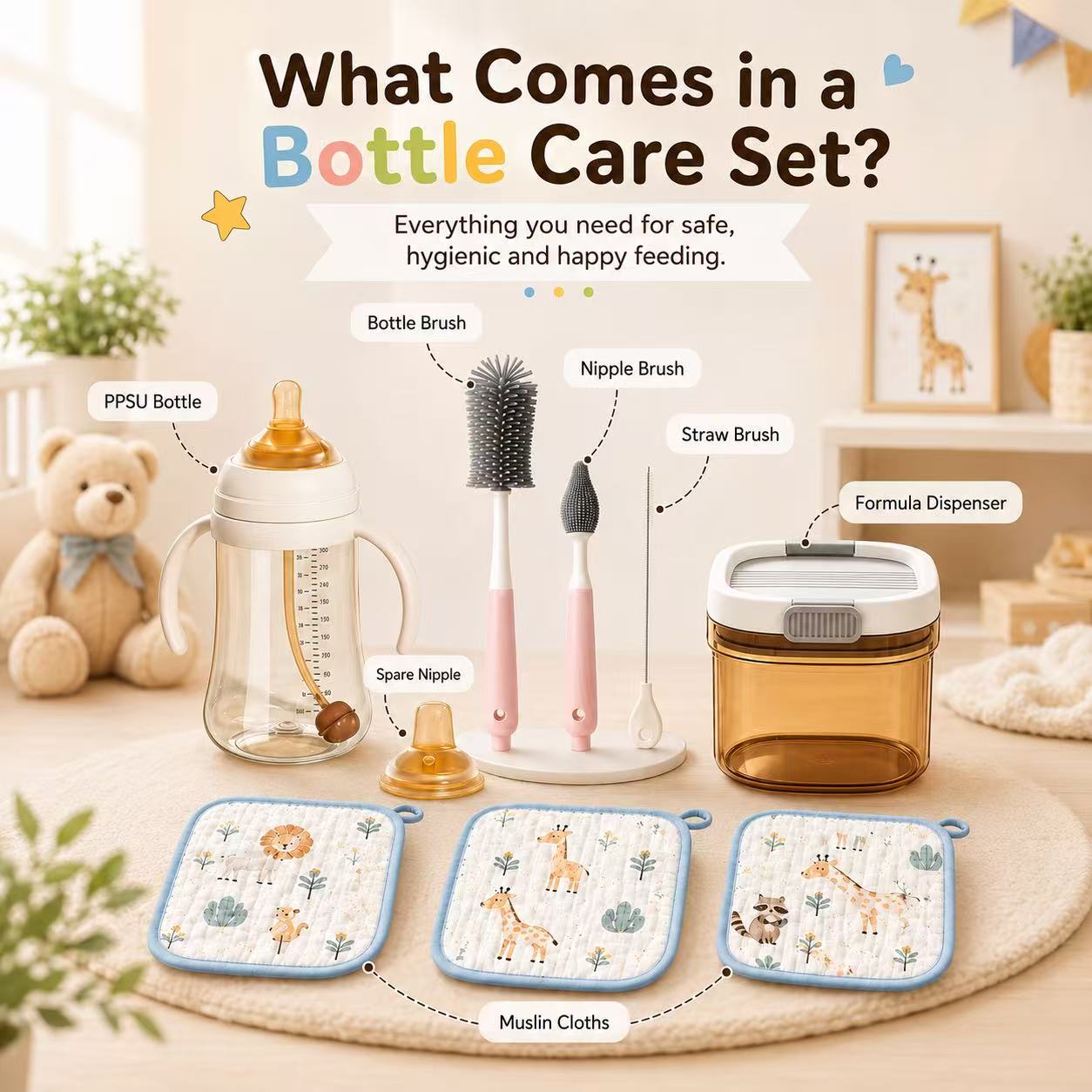
PPSU Baby Bottle
A PPSU baby bottle is lightweight and practical for everyday feeding. After each feed, the bottle and its removable parts should be cleaned before the next use.
Large Bottle Brush
A large bottle brush is designed to reach the main interior, sides and bottom of the bottle.
Nipple Brush
A smaller nipple brush can help clean nipples and compact feeding accessories that may be difficult to reach with a full-size brush.
Detail Brush
A slim detail brush is useful for narrow openings and other small areas of feeding accessories.
Muslin Cloths
Clean muslin cloths are useful for handling small spills and keeping the feeding area tidy during everyday routines.
Formula Dispenser
A formula dispenser can help parents keep feeding preparation more organised, especially when preparing for outings. Keep the dispenser clean and completely dry between uses.
Step-by-Step Baby Bottle Care Routine
A consistent routine can make bottle care easier to manage. The following five steps provide a simple approach for everyday cleaning and preparation.
Step 1: Rinse After Feeding
Rinse the bottle with clean water soon after feeding. This helps remove fresh milk residue before it has time to remain on the bottle surface.
Step 2: Separate the Bottle Parts
Take apart removable components such as the nipple, collar, lid and other feeding accessories. Cleaning each part separately makes it easier to reach smaller areas.
Step 3: Clean with the Right Brush
Use the large bottle brush for the main bottle interior. Use the nipple brush for smaller feeding parts and the detail brush for narrow openings that may be difficult to reach.
Step 4: Rinse Thoroughly
Rinse all cleaned bottle parts thoroughly with clean water after washing.
Step 5: Air Dry Completely
Place the bottle and accessories in a clean, well-ventilated area and allow them to air dry completely before storing or reassembling them.
For a more detailed cleaning guide, read our How to Clean a PPSU Baby Bottle Properly article.
Which Brush Should You Use for Each Bottle Part?
Different bottle parts have different shapes and sizes, so using one large brush for everything may not always be practical.
A three-brush setup makes it easier to choose a cleaning tool that matches each area.
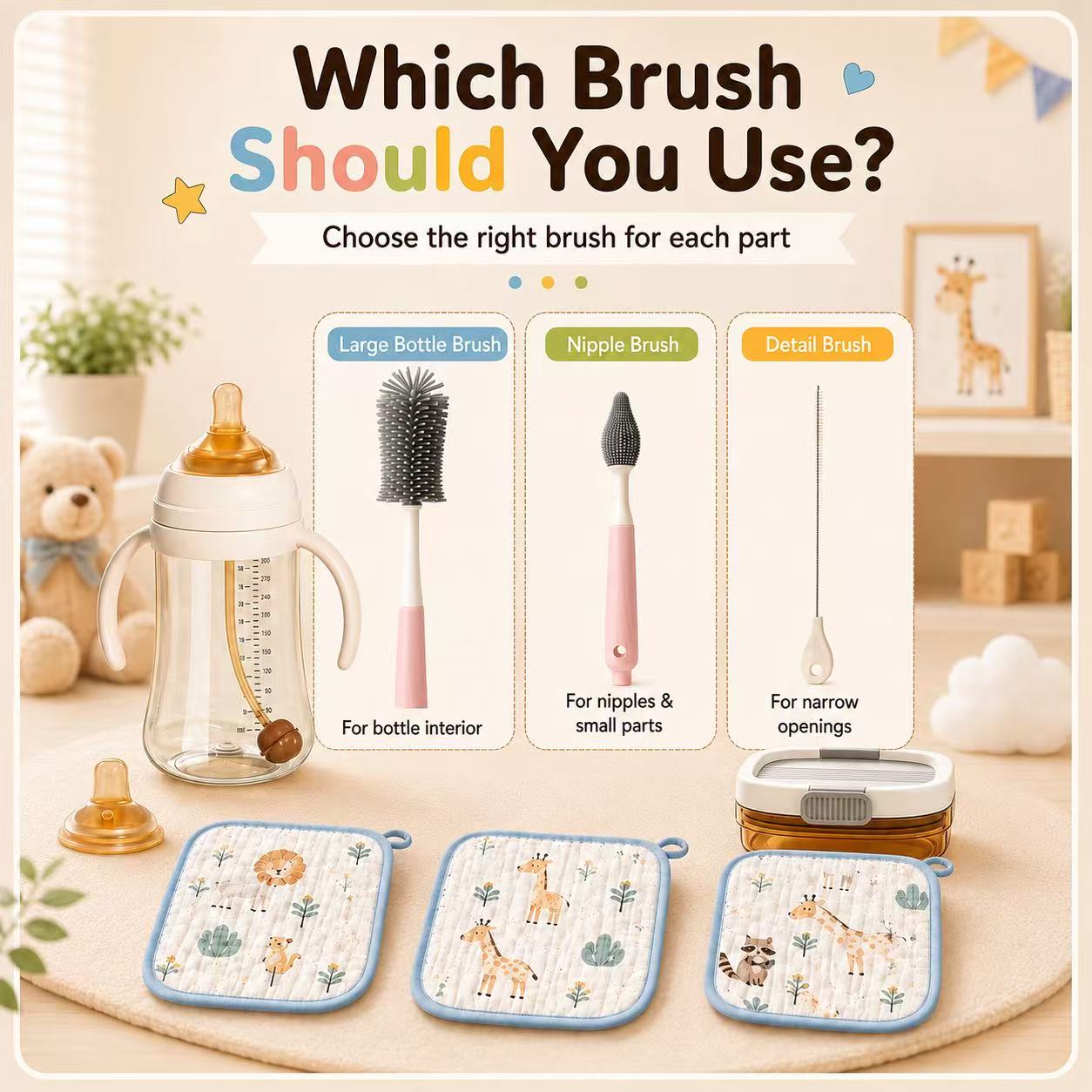
Large Bottle Brush — Bottle Interior
Use the large bottle brush for the inside, sides and bottom of the main bottle.
Nipple Brush — Nipples and Small Parts
The smaller nipple brush is better suited to compact feeding accessories and nipple areas.
Detail Brush — Narrow Openings
The slim detail brush can reach narrow openings and small areas where a larger brush may not fit.
Not sure which brush is right for each part? Read our complete How to Choose a Baby Bottle Brush guide.
How to Keep Feeding Essentials Clean, Dry and Organised
Cleaning is only one part of a good bottle care routine. Feeding accessories should also be allowed to dry properly and stored in a clean, organised area.
Keeping bottle parts, brushes, muslin cloths and feeding accessories organised can save time when preparing the next feed.
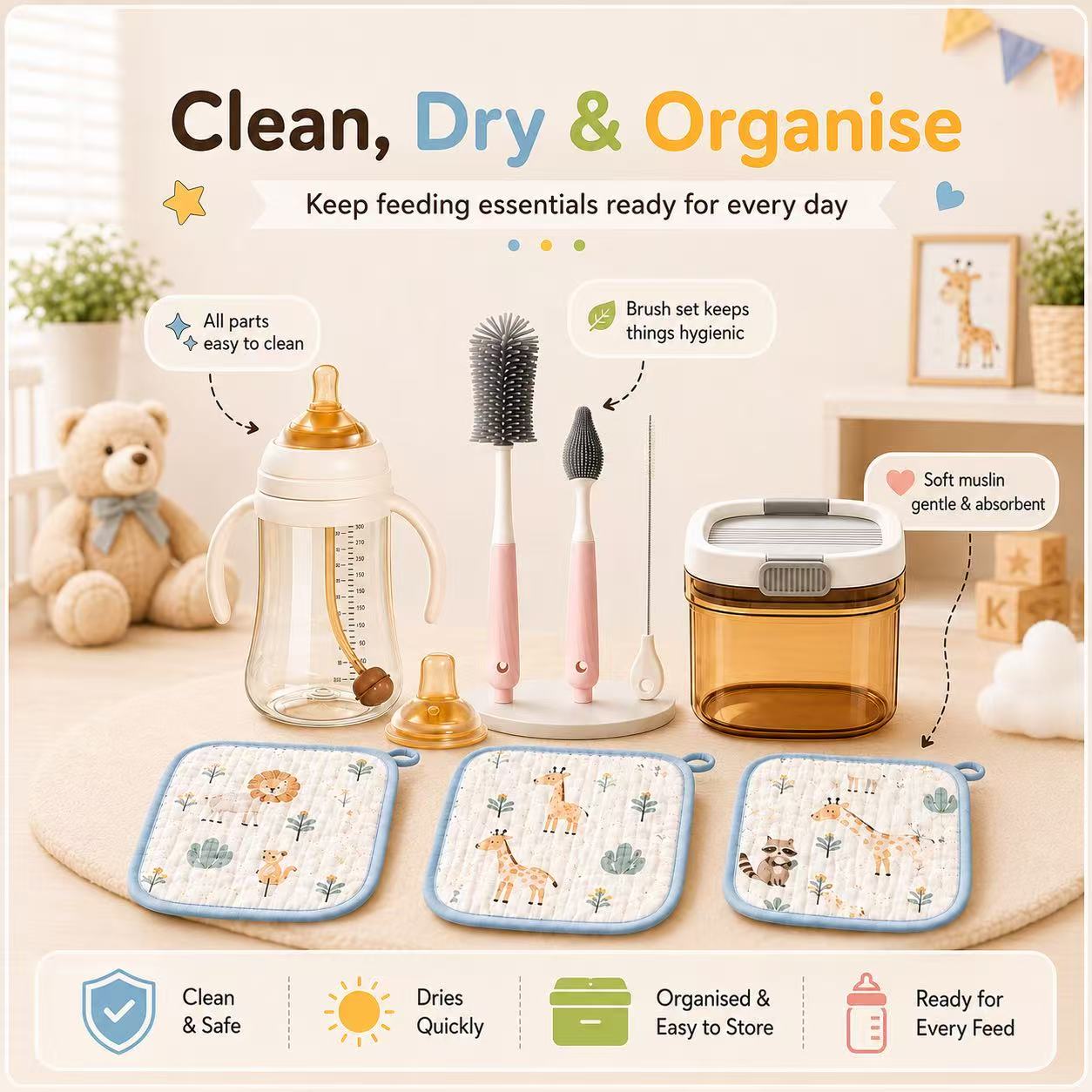
Allow Brushes to Dry
Rinse cleaning brushes after use and allow them to dry in a well-ventilated area instead of placing them immediately into a closed container.
Keep Muslin Cloths Clean
Keep clean muslin cloths ready for feeding and replace used or wet cloths with fresh ones when needed.
Store Bottle Parts After Drying
Wait until feeding equipment is completely dry before storing or reassembling the parts.
Keep Formula Storage Dry
If you use a formula dispenser, make sure it is clean and fully dry before adding formula or storing it for later use.
Common Bottle Care Mistakes to Avoid
Even with the right cleaning tools, a few common habits can make everyday bottle care less effective.
Leaving Milk Residue for Too Long
Cleaning soon after feeding can make it easier to remove fresh milk residue from bottles and accessories.
Using One Brush for Every Part
A large bottle brush may not reach nipples, narrow openings and small feeding accessories as effectively as smaller brushes.
Storing Brushes While Wet
Wet brushes should be allowed to dry properly before being stored in a closed area.
Reassembling Parts Before They Are Dry
Allow bottle parts to dry completely before reassembling or storing them.
Forgetting to Check Cleaning Brushes
Check bottle brushes regularly. If the bristles become heavily worn, damaged or difficult to clean, consider replacing the brush.
How Often Should You Follow a Baby Bottle Care Routine?
A basic bottle care routine should be followed after each bottle feed. Rinsing and cleaning the bottle soon after use can make everyday maintenance easier.
Cleaning brushes should also be rinsed after use and allowed to dry properly. Muslin cloths and other feeding accessories should be replaced with clean, dry ones when needed.
Make Everyday Bottle Care Easier with Baby Fun
A simple routine becomes easier when the right feeding and cleaning essentials are already organised and ready to use.
The Baby Fun Bottle Care Set brings together a PPSU baby bottle, spare nipple, three cleaning brushes, a formula dispenser and three muslin cloths for everyday feeding and bottle care.
By keeping commonly used feeding essentials together, parents can make bottle preparation, cleaning and organisation easier to manage at home or during everyday outings.
Frequently Asked Questions
How often should baby bottles be cleaned?
Baby bottles should be cleaned after each use so they are ready for the next feed.
Do I need different bottle brushes?
Different brush sizes can be useful because bottles, nipples and narrow openings have different shapes and cleaning needs.
How should bottle brushes be dried?
Rinse bottle brushes after use and allow them to air dry completely in a clean, well-ventilated area.
Can I reassemble a bottle while it is still wet?
It is better to allow all bottle parts to dry completely before reassembling or storing them.
When should bottle brushes be replaced?
Replace a bottle brush when the bristles become heavily worn, damaged or difficult to keep clean.
How should a formula dispenser be stored?
Keep the dispenser clean and completely dry, and store it in a clean, dry location when it is not in use.
For additional guidance on cleaning infant feeding items, parents can also refer to the CDC’s recommendations.