
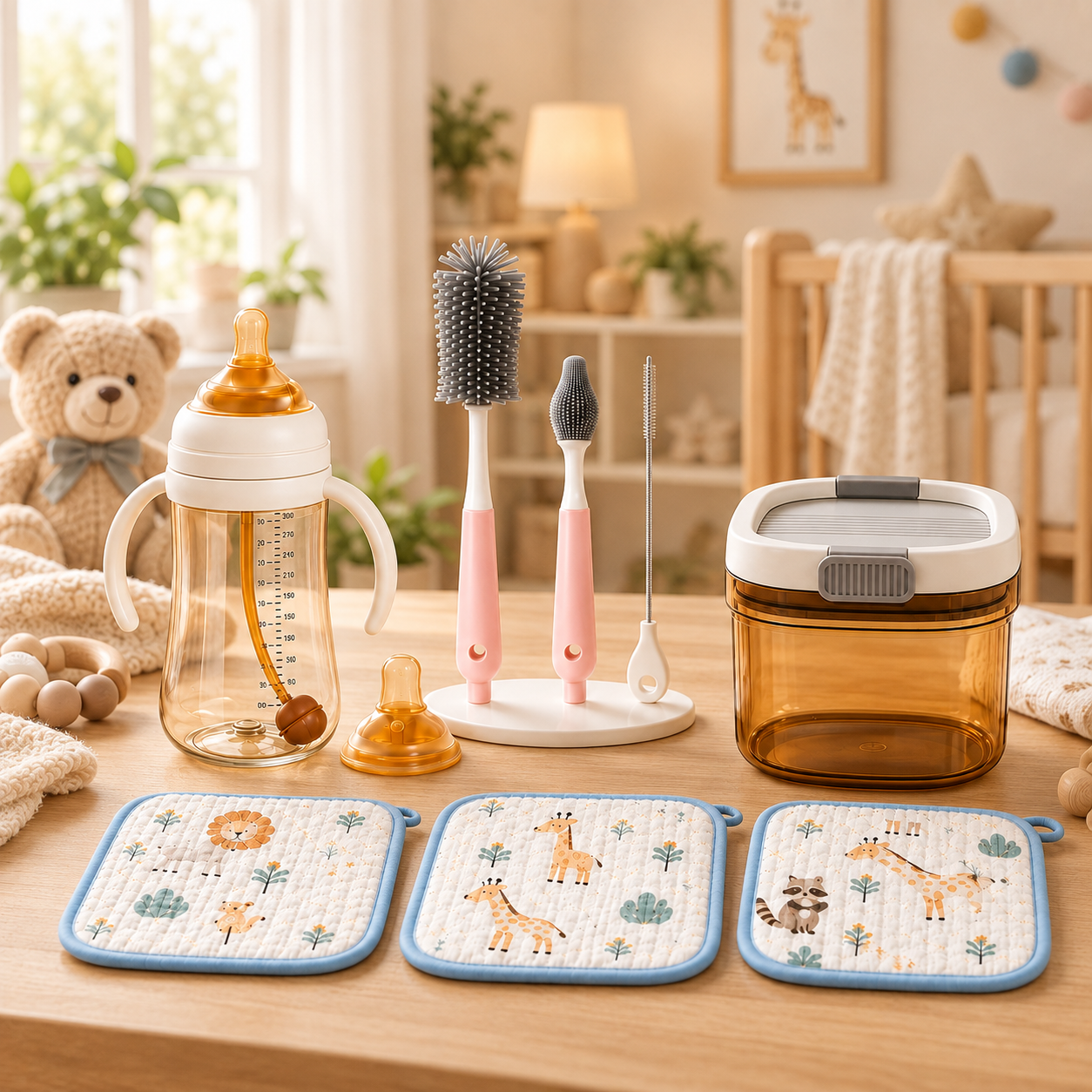
For busy parents, a smooth feeding routine often starts with one simple idea: keep everything clean, dry, and organised.
Baby bottles, nipples, brushes, formula containers, and soft cloths are used frequently throughout the day. When these essentials are stored together and cleaned properly, feeding becomes easier to manage and the whole routine feels less stressful.
For families in Singapore, where warm and humid conditions can make drying and storage especially important, a simple bottle care system can help keep feeding essentials ready for the next use.
What Is a Baby Bottle Care Routine?
A baby bottle care routine is the regular process of:
- cleaning bottles and feeding parts after use
- using the right brush for different areas
- allowing items to air-dry completely
- keeping clean feeding essentials organised
- checking bottles, nipples, and accessories for wear
The CDC recommends cleaning baby bottles and other feeding items after every feeding. It also recommends allowing cleaned items to air-dry thoroughly before storing them in a clean, protected area.
This is why having dedicated cleaning tools and an organised feeding station can be useful for everyday bottle care.
1. Clean Bottles After Every Feeding
After feeding, separate the bottle into its individual parts before cleaning.
This may include:
- bottle body
- nipple or soft spout
- cap
- ring
- handles
- valves or other removable parts
According to the CDC, bottles should be cleaned after every feeding rather than simply rinsed and reused.
A dedicated bottle brush can help reach the inside walls and base of the bottle, while smaller brushes are useful for nipples, narrow openings, and small components.
For a more detailed cleaning guide, read our guide on how to clean a PPSU baby bottle properly.
2. Use Different Brushes for Different Parts
One brush does not always clean every part effectively.
A practical cleaning set can include:
Large Bottle Brush
Best for cleaning the main bottle body and wider internal surfaces.
Small Detail Brush
Useful for nipples, bottle caps, grooves, and smaller feeding parts.
Slim Cleaning Brush
Designed for narrow areas that are difficult to reach with a standard brush.
The CDC also advises using a clean brush dedicated specifically to infant feeding items when washing bottles by hand.
Using separate brush sizes can make daily cleaning quicker and more convenient.
Not sure which brush is best for each part? See our practical guide to choosing a baby bottle brush.
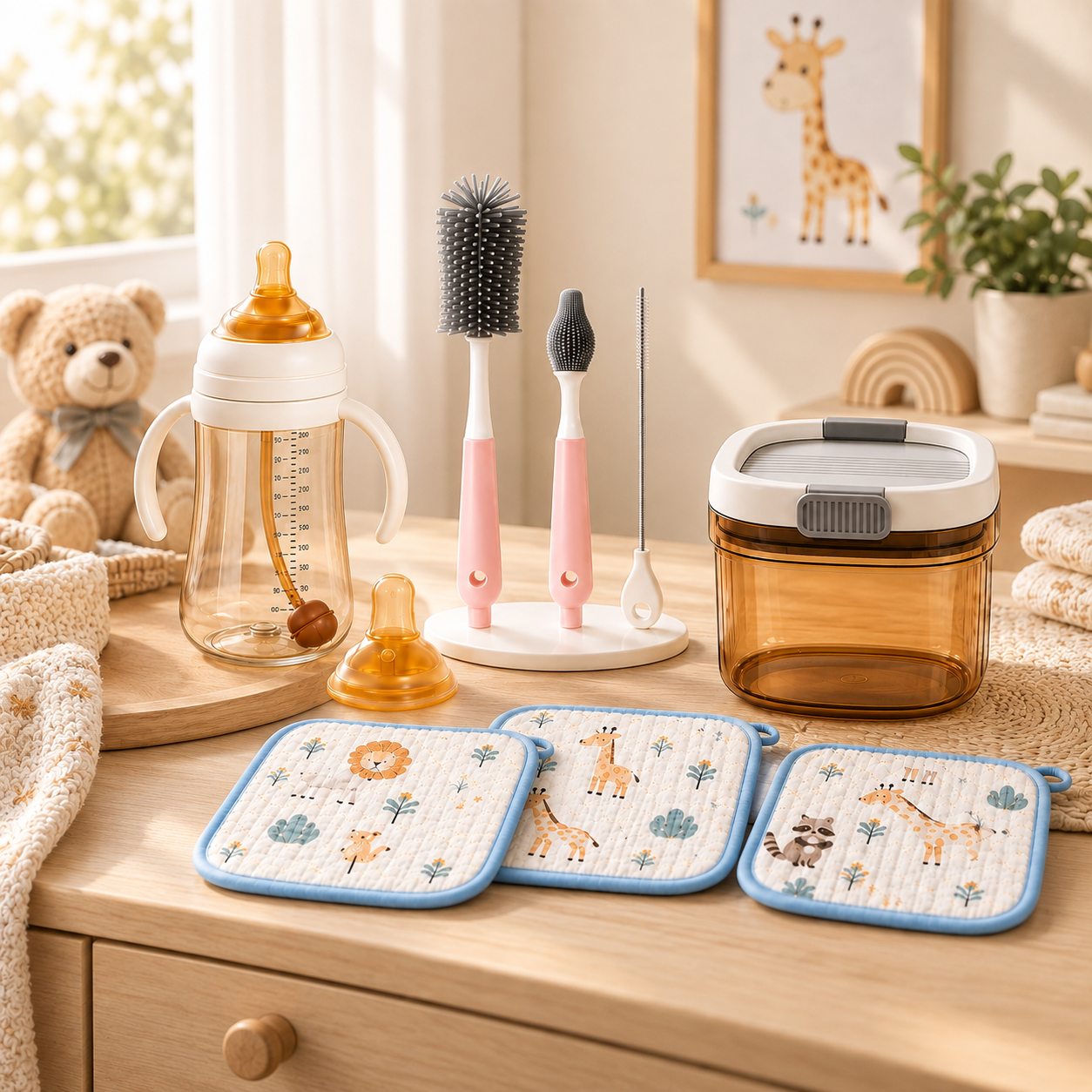
3. Let Feeding Items Air-Dry Completely
Cleaning is only part of the routine.
After rinsing, feeding items should be allowed to dry thoroughly before they are put away.
The CDC recommends placing cleaned feeding items on a clean, unused surface and allowing them to air-dry completely. It advises against rubbing or patting items dry with a dish towel because this may transfer germs back onto clean items.
For Singapore households, where humidity is often high, allowing enough drying time is especially practical.
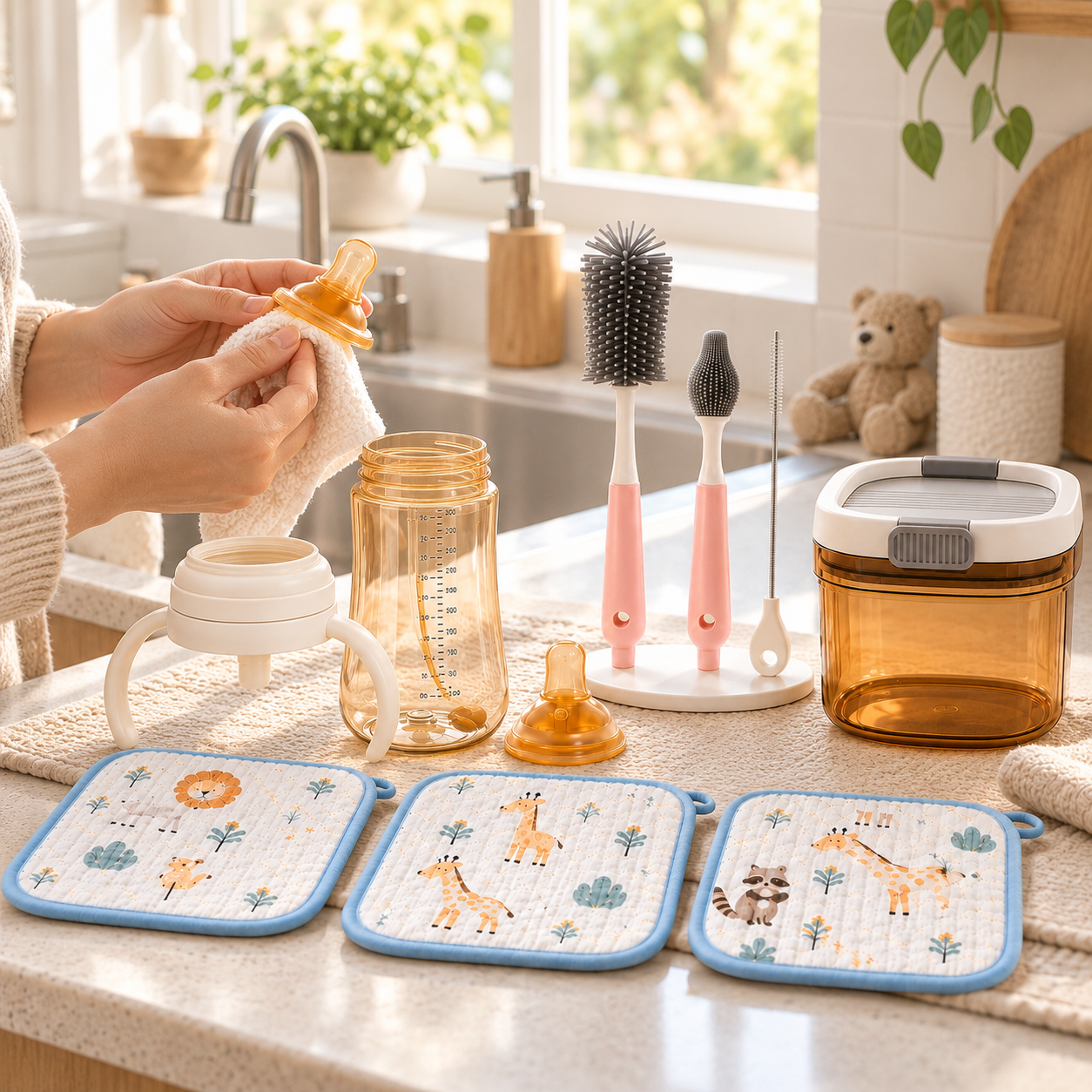
4. Keep Formula and Feeding Accessories Organised
A feeding station becomes much easier to use when bottles, brushes, cloths, and formula accessories each have a dedicated place.
Your set includes a formula storage container that can help parents keep feeding supplies organised and easier to access.
A simple feeding area might include:
- clean baby bottle
- spare nipple or spout
- cleaning brushes
- formula container
- soft muslin cloths
The goal is not to create a complicated system. It is simply to keep frequently used items together so they are easy to reach during feeding time.
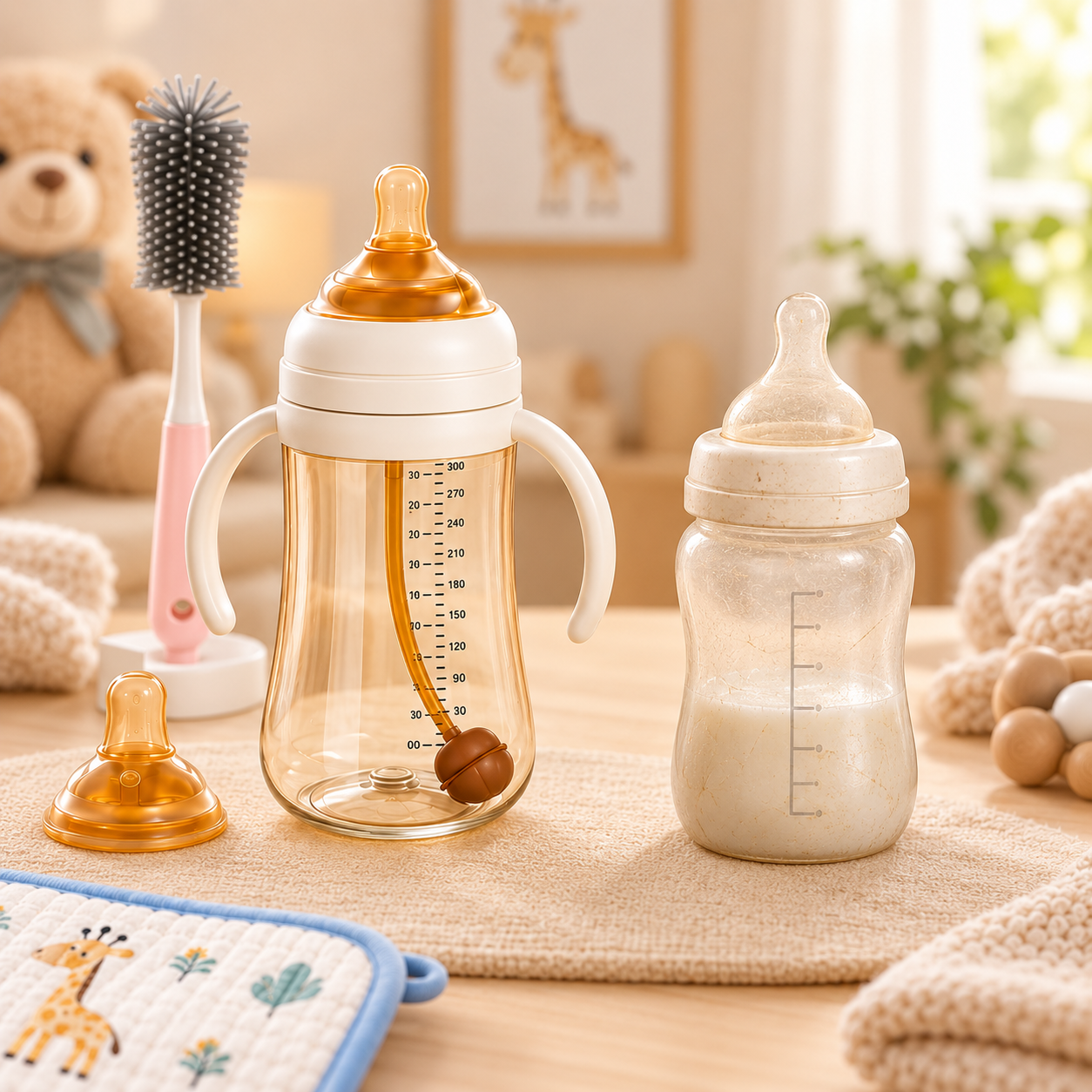
5. Use Soft Cloths for Everyday Baby Care
Soft cloths can be useful around the feeding area for everyday tasks such as wiping small spills or keeping the feeding space tidy.
Your set includes three soft printed cloths, which also make the feeding station feel more complete and organised.
Keep clean cloths separate from used ones, and wash them regularly.
6. Sanitise When Appropriate
Cleaning and sanitising are not exactly the same.
The CDC says sanitising feeding items is especially important for babies who:
- are younger than 2 months
- were born prematurely
- have a weakened immune system
For older, healthy babies, daily sanitising may not always be necessary if feeding items are cleaned carefully after every use.
Parents should also follow the bottle manufacturer’s instructions because materials and heat tolerances can differ.
7. Check Bottles and Nipples Regularly
A bottle care routine should also include a quick visual inspection.
Look for:
- cracks
- deep scratches
- damaged nipples or spouts
- loose parts
- unusual odours
- permanent staining or visible wear
If a feeding item is damaged or no longer performs normally, replacing the affected part is usually the safer choice.
This also gives you a natural internal link to your next article:
If you are unsure when it is time to replace a bottle, see our baby bottle replacement guide.
Quick Baby Bottle Care Checklist
For GEO and AI search, this section is useful because it gives a direct answer in a compact format.
A simple daily baby bottle care routine is:
- Take the bottle apart after feeding.
- Rinse each component.
- Wash with a dedicated bottle brush.
- Clean nipples and narrow parts with smaller brushes.
- Rinse thoroughly.
- Allow everything to air-dry completely.
- Store clean items in a protected, organised area.
- Inspect bottles and feeding parts regularly for damage.
The CDC recommends cleaning bottles after every feeding and thoroughly air-drying feeding equipment before storage.
Frequently Asked Questions
How often should baby bottles be cleaned?
Baby bottles should be cleaned after every feeding. The CDC advises fully cleaning used bottles instead of only rinsing them.
Do baby bottles need to be sanitised every day?
Daily sanitising is particularly important for babies younger than 2 months, premature babies, or babies with weakened immune systems. For older healthy babies, careful cleaning after every use may be sufficient.
Can I dry baby bottles with a kitchen towel?
Air-drying is preferable. The CDC advises against rubbing or patting feeding items dry with a dish towel because it may transfer germs to the cleaned surfaces.
Do I need a separate bottle brush?
Using a brush reserved only for infant feeding equipment is recommended when cleaning bottles by hand. Different brush sizes can also make it easier to reach narrow or detailed areas.
How should clean baby bottles be stored?
Once completely dry, clean bottle parts can be reassembled and stored in a clean, protected area away from dust and dirt.
What should I include in a baby bottle care set?
A practical set can include a baby bottle, cleaning brushes in different sizes, spare feeding parts, a formula container, and soft cloths for everyday feeding care.
Why an Organised Bottle Care Set Helps Busy Parents
Parents do not necessarily need more complicated baby products. They often need everyday essentials that work together.
A bottle care set can make feeding routines easier by keeping the most frequently used items in one place:
Bottle → Clean → Dry → Store → Feed again
For busy Singapore families, this simple routine can help reduce clutter and make bottle preparation feel more manageable.
Final Thoughts
A good baby bottle care routine does not have to be complicated.
Clean bottles after every feeding, use dedicated brushes, allow all parts to air-dry completely, and keep clean feeding essentials organised.
Your Baby Fun bottle care set brings these everyday essentials together in one coordinated setup, including a PPSU bottle, cleaning brushes, formula storage and soft cloths.
Keeping feeding time simple starts with keeping the essentials ready.
Authority Reference
This article follows general infant feeding-item cleaning and storage guidance published by the U.S. Centers for Disease Control and Prevention. The CDC recommends cleaning bottles after every feed, carefully air-drying clean feeding items, and using additional sanitising precautions for younger or higher-risk infants.