
Knowing how to store baby bottles after cleaning properly can make everyday bottle care simpler and more organised.
Cleaning removes milk residue and dirt, but freshly washed bottle parts still need enough time to dry before they are stored. Keeping clean and used feeding items separate can also make everyday bottle care easier and more organised.
The simplest approach is to let every part air-dry completely, keep clean items away from used ones, and store dry bottles in a clean, protected area.
Here are seven practical tips parents can follow.
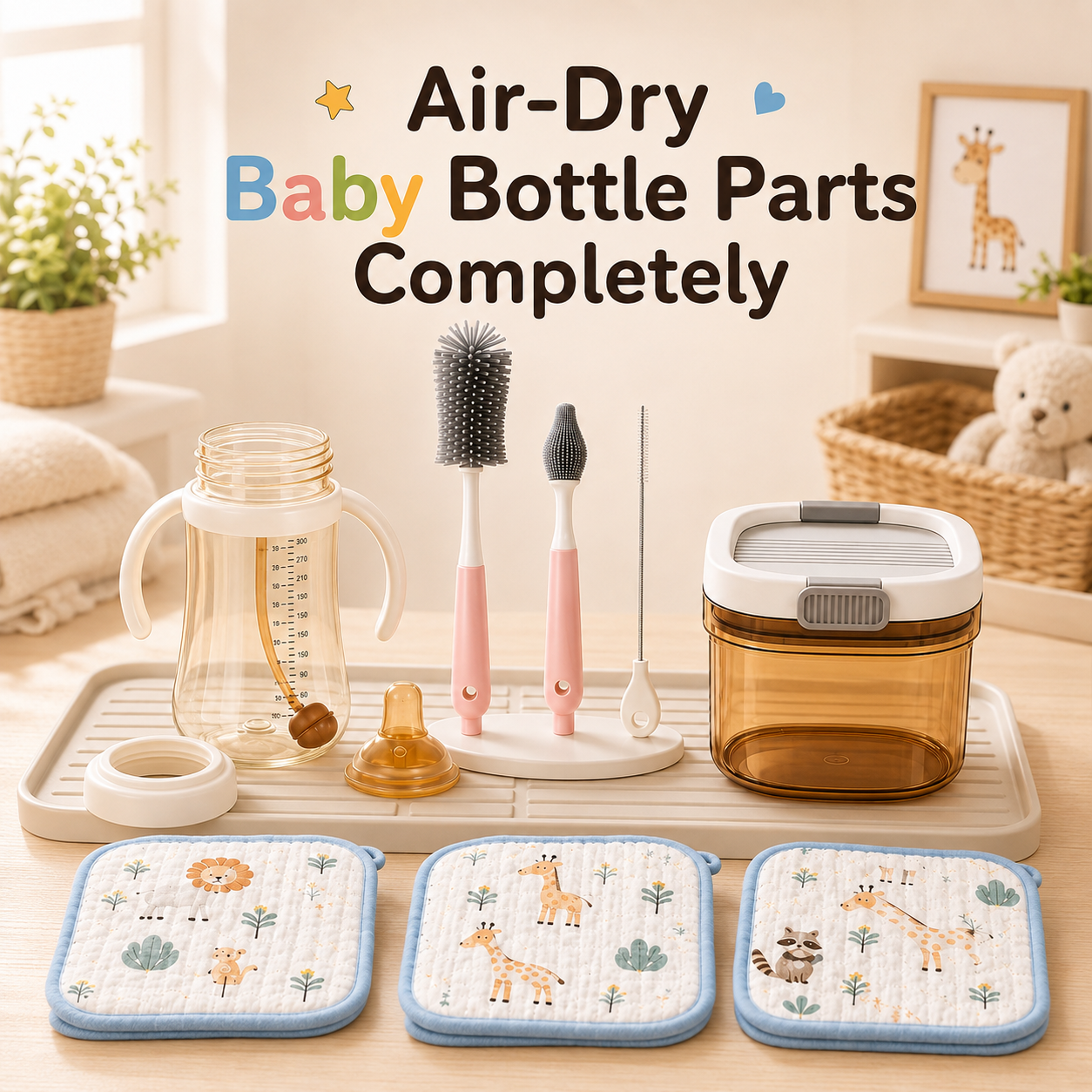
1. Let Baby Bottle Parts Air-Dry Completely
After washing, separate the bottle body, nipple, cap, ring, handles and any removable feeding parts.
Place them on a clean drying rack or clean surface and allow them to air-dry completely.
Avoid putting wet bottle parts together immediately. Moisture can remain inside the bottle or around small feeding parts when they are assembled too early.
Air-drying also reduces the need to handle freshly cleaned parts with a towel.
For additional information, parents can refer to the CDC guidance on cleaning, sanitizing and storing infant feeding items.
CDC guidance on cleaning, sanitizing and storing infant feeding items
2. Avoid Using a Used Kitchen Towel
It may seem faster to dry bottle parts with a kitchen towel, but towels can pick up moisture, food residue and other material during normal kitchen use.
Allowing bottle parts to air-dry helps reduce unnecessary contact after washing.
If you use a drying mat or rack, keep it clean and use it mainly for baby feeding items whenever possible.
3. Keep Bottle Parts Separate While Drying
Bottle parts do not all dry at the same speed.
The bottle body may dry quickly, while nipples, rings, lids and narrow parts can hold moisture for longer.
Keeping every part separate allows better airflow and makes it easier to check whether everything is completely dry.
Once all parts are dry, you can reassemble the bottle if that makes your feeding routine more convenient.
4. Store Dry Bottles in a Clean and Protected Area
Once every part is completely dry, move the bottle and accessories to a clean storage area.
A cabinet, clean storage container or dedicated feeding shelf can all work well.
Try not to keep clean bottle parts:
- Next to used dishes
- Directly beside the sink
- Near cleaning products
- In damp areas
- On dusty open surfaces for long periods
A dedicated bottle-storage area makes it easier to keep feeding items organised and ready for the next use.
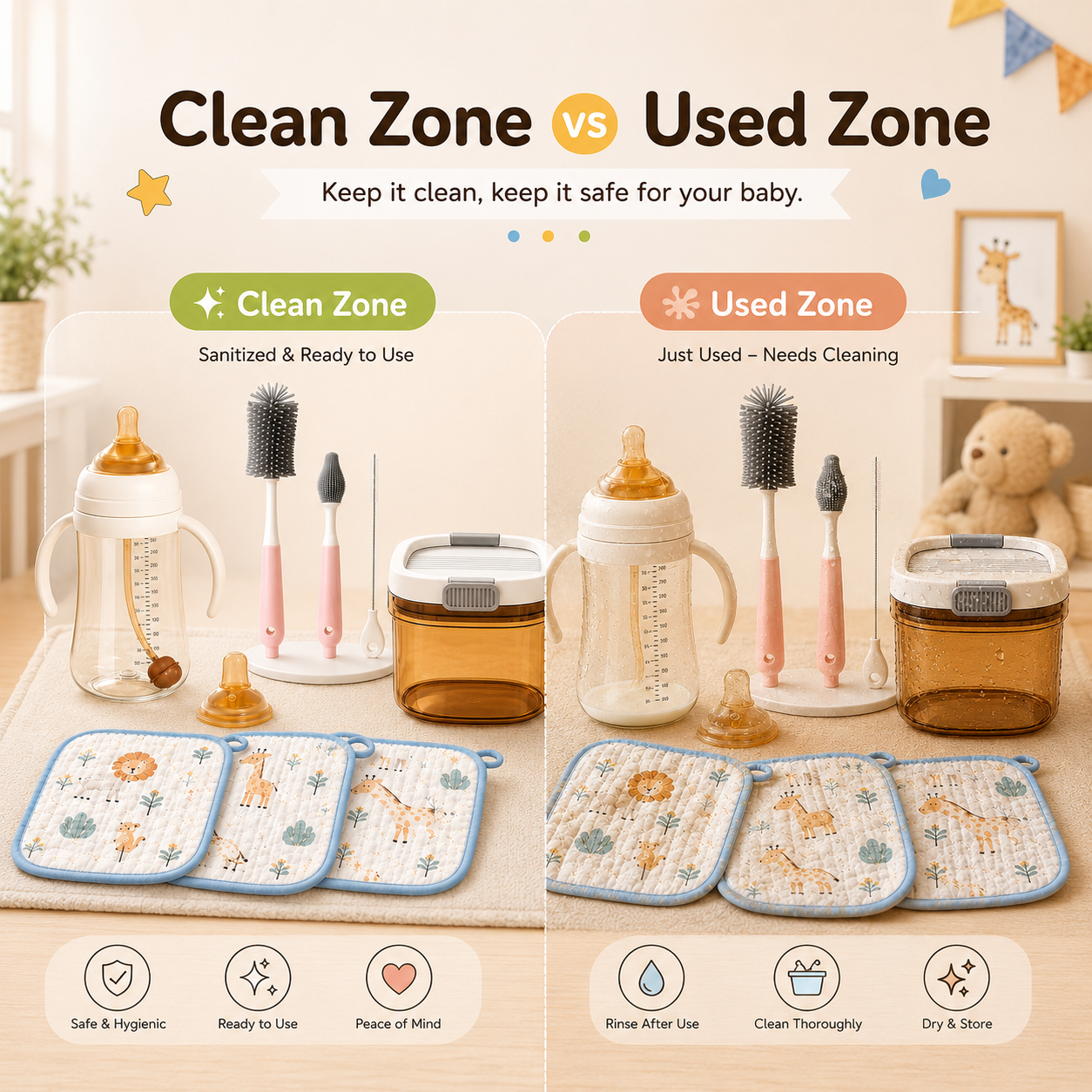
5. Create a Clean Zone and a Used Zone
One of the easiest ways to organise baby feeding items is to create two separate areas.
Clean Zone
Use this area only for bottles, nipples, brushes, formula containers and cloths that have already been cleaned and dried.
Used Zone
Use a different area for feeding items that still need to be washed.
Keeping these two areas separate helps prevent parents from accidentally mixing clean and used feeding accessories during a busy day.
6. Let Bottle Cleaning Brushes Dry Too
Bottle brushes also need time to dry after use.
After cleaning bottles, rinse each brush thoroughly and leave it in an area with good airflow.
If your bottle-care set contains different brush sizes, such as:
- Bottle brush
- Nipple brush
- Straw or detail brush
keep them separated while drying.
A large bottle brush is designed for the bottle body, while smaller brushes are useful for nipples, narrow openings and hard-to-reach areas.
7. Follow the Same Bottle-Care Routine Every Day
Bottle storage becomes much easier when the same routine is repeated every day.
A simple routine might look like this:
- Separate bottle parts after feeding.
- Rinse away remaining milk.
- Wash the bottle and small feeding parts.
- Rinse thoroughly.
- Leave every part to air-dry.
- Allow cleaning brushes to dry.
- Move completely dry items into the clean storage area.
Keeping the process simple can make feeding, cleaning and organisation easier for busy parents.
How to Store a PPSU Baby Bottle After Cleaning
A PPSU baby bottle can follow the same basic storage routine.
After cleaning a PPSU bottle:
- Separate removable bottle parts
- Allow each part to air-dry
- Check that no visible moisture remains
- Keep clean parts away from used feeding items
- Store them in a clean, dry area
- Follow the manufacturer’s care instructions
The bottle does not need a complicated storage system. What matters most is that it is clean, completely dry and protected from unnecessary contact before the next feed.
If you need help with the cleaning stage first, read our guide on how to properly clean a PPSU baby bottle.
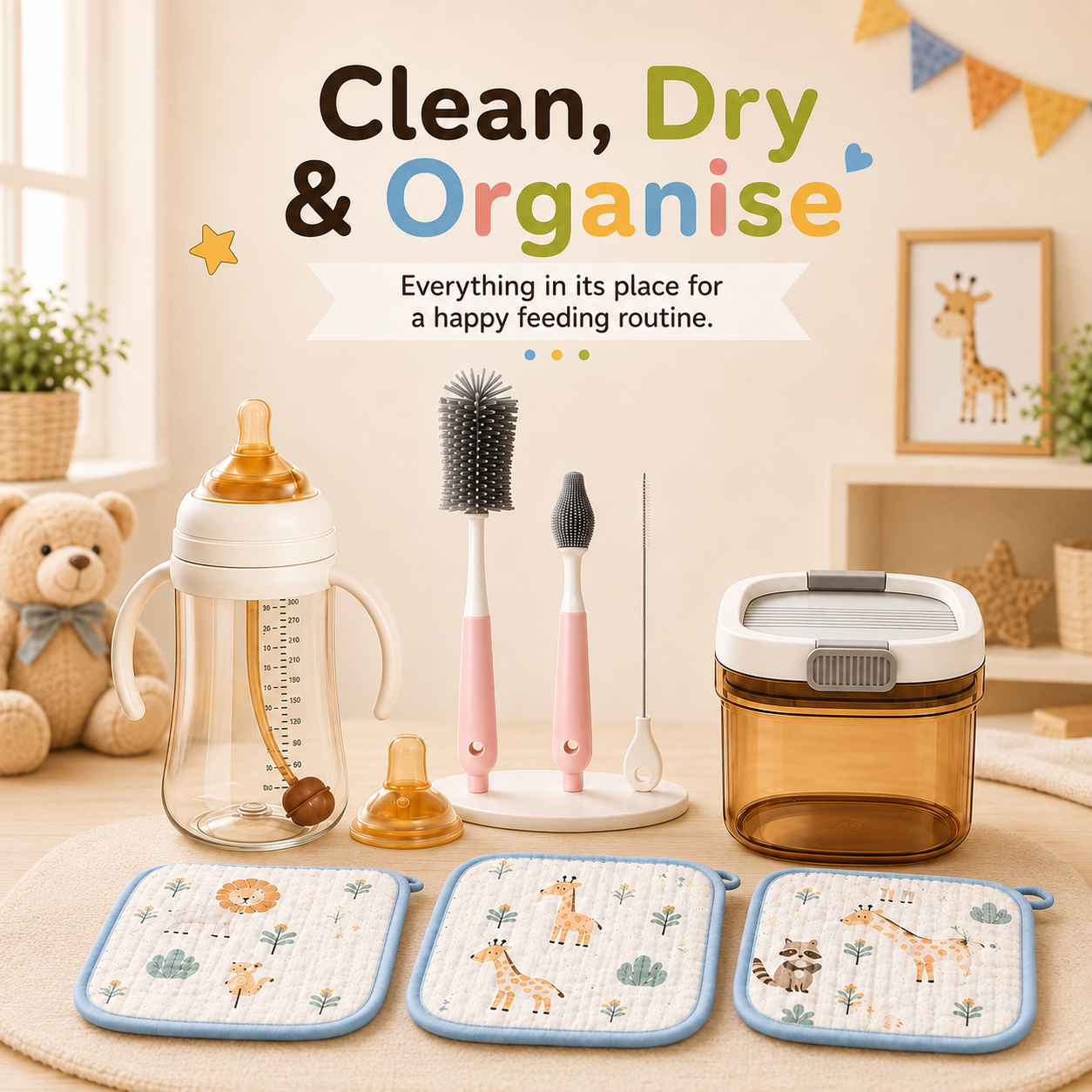
Keep Bottle-Care Essentials Organised
Bottle care usually involves more than the bottle itself.
Parents may also need to organise:
- Cleaning brushes
- Spare nipples
- Formula storage containers
- Muslin cloths
- Feeding accessories
Keeping everything together in one clean area can save time, especially during night feeds or busy mornings.
The goal is not to create a complicated organisation system. A simple routine that separates clean, dry and used items is usually easier to maintain.
Frequently Asked Questions About Storing Baby Bottles
How should I store baby bottles after cleaning?
Allow all bottle parts to air-dry completely before storage. Once dry, keep them in a clean, protected area away from used dishes, moisture and dust.
Can I store baby bottles while they are still wet?
It is better to wait until all bottle parts are completely dry. Moisture can remain inside bottles, caps and small feeding parts if they are stored too soon.
Should I dry baby bottles with a towel?
Air-drying is a practical option because it reduces additional contact with freshly cleaned feeding items.
Should baby bottles be stored assembled or separated?
Either method can work once every part is completely dry. Some parents prefer to assemble dry bottles for convenience, while others keep parts separated until the next feed.
Where is the best place to store clean baby bottles?
A clean, dry cabinet, dedicated feeding shelf or protected storage container can all be suitable options.
How should baby bottle brushes be stored?
Rinse bottle brushes after use, allow them to air-dry completely and keep them in a clean area with good airflow.
Final Thoughts
Learning how to store baby bottles after cleaning helps complete a good bottle-care routine.
Washing is only part of the process. Bottle bodies, nipples, brushes and other feeding accessories should also have enough time to dry before they are stored.
A simple system can work well:
Clean → Air-Dry → Organise → Store
Parents do not need a complicated setup. Keeping clean and used feeding items separate and storing completely dry items in a protected area can make everyday bottle care more convenient.
Keep Your Bottle Care Routine Simple
A practical bottle-care set can make everyday feeding, cleaning and organisation easier.
Explore Baby Fun feeding and bottle-care essentials designed for simple daily routines at home or on the go.